


Weigh Station Locations Near Me - Open/Closed Status

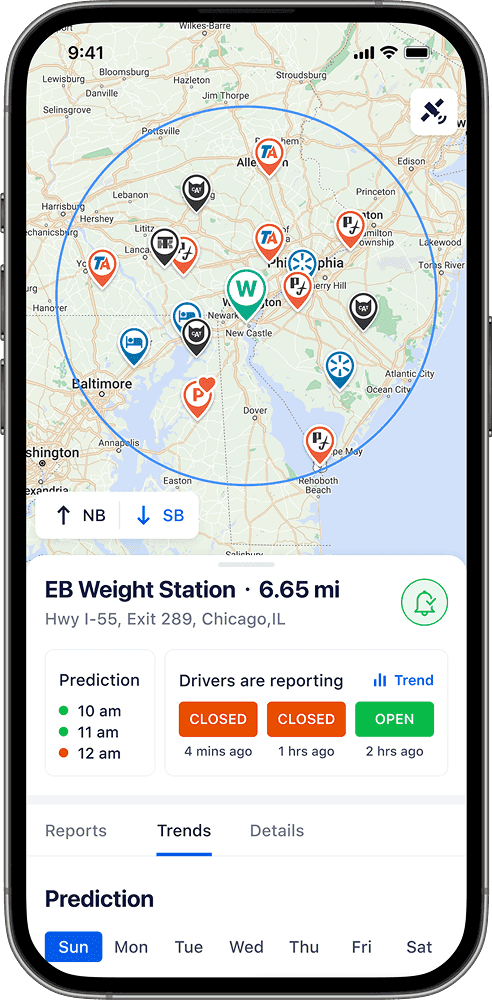
Trucker Path helps truck drivers find truck scales nearby. It even tells you if they're open or closed. Sounds unbelievable, right? Check it out and become a believer. 600k truckers already have!

Send me the link to install

4.8/5 Stars

1.3M+ Truckers' reviews

Weigh Station Locations Near Me - Open/Closed Status

Trucker Path helps truck drivers find truck scales nearby. It even tells you if they're open or closed. Sounds unbelievable, right? Check it out and become a believer. 600k truckers already have!

Send me the link to install

4.8/5 Stars

1.3M+ Truckers' reviews

Weigh Station Locations Near Me - Open/Closed Status

Trucker Path helps truck drivers find truck scales nearby. It even tells you if they're open or closed. Sounds unbelievable, right? Check it out and become a believer. 600k truckers already have!

Send me the link to install

4.8/5 Stars

1.3M+ Truckers' reviews

Truckers Power Us

Truckers Power Us

Truckers Power Us

Open or Closed

Powered by the largest trucking community in America, Trucker Path accurately reports if a weigh station is OPEN or CLOSED thanks to fellow drivers updating the status of a weigh station. With just a few clicks, you can too!

Check a weigh stations previous status with up-to-the-minute results and even view the history to track patterns.


Looking for truck scales?

We can help you!

FAQ

Frequently Asked Questions

Couldn’t find what you were looking for?
write to us at

What are Weigh Stations for?

Weigh stations are in place to ensure trucks do not exceed the maximum weight of 80,000 pounds. They are operated by the Department of Transportation or Department of Motor Vehicles depending on the state. Weigh stations categorize loads as either divisible or non-divisible. Divisible loads can be divided into smaller groups such as pallets, where non-divisible loads such as large equipment cannot.

How does a weigh station work?

When a weigh station is open, trucks must enter to weigh-in. Most stations have rolling scales to help with conjestion. Truckers are also subject to show logbooks as well as freight and truck paperwork. At a weigh station, trucks can be inspected for equipment safety to ensure things like tires and brakes are operating properly. Violations are subject to fines.

Who has to stop at weigh station?

Commercial motor vehicle and some large moving or transportation trucks with a specific gross vehicle weight, depending on the state. Some states such as Texas and California require all commercial vehicles to stop whereas Ohio, New Jersey, and Kentucky require a truck to stop at a weigh station if it weighs 10,000 pounds or more.

FAQ

Frequently Asked Questions

Couldn’t find what you were looking for?
write to us at

What are Weigh Stations for?

Weigh stations are in place to ensure trucks do not exceed the maximum weight of 80,000 pounds. They are operated by the Department of Transportation or Department of Motor Vehicles depending on the state. Weigh stations categorize loads as either divisible or non-divisible. Divisible loads can be divided into smaller groups such as pallets, where non-divisible loads such as large equipment cannot.

How does a weigh station work?

When a weigh station is open, trucks must enter to weigh-in. Most stations have rolling scales to help with conjestion. Truckers are also subject to show logbooks as well as freight and truck paperwork. At a weigh station, trucks can be inspected for equipment safety to ensure things like tires and brakes are operating properly. Violations are subject to fines.

Who has to stop at weigh station?

Commercial motor vehicle and some large moving or transportation trucks with a specific gross vehicle weight, depending on the state. Some states such as Texas and California require all commercial vehicles to stop whereas Ohio, New Jersey, and Kentucky require a truck to stop at a weigh station if it weighs 10,000 pounds or more.

FAQ

Frequently Asked Questions

Couldn’t find what you were looking for?
write to us at

What are Weigh Stations for?

Weigh stations are in place to ensure trucks do not exceed the maximum weight of 80,000 pounds. They are operated by the Department of Transportation or Department of Motor Vehicles depending on the state. Weigh stations categorize loads as either divisible or non-divisible. Divisible loads can be divided into smaller groups such as pallets, where non-divisible loads such as large equipment cannot.

How does a weigh station work?

When a weigh station is open, trucks must enter to weigh-in. Most stations have rolling scales to help with conjestion. Truckers are also subject to show logbooks as well as freight and truck paperwork. At a weigh station, trucks can be inspected for equipment safety to ensure things like tires and brakes are operating properly. Violations are subject to fines.

Who has to stop at weigh station?

Commercial motor vehicle and some large moving or transportation trucks with a specific gross vehicle weight, depending on the state. Some states such as Texas and California require all commercial vehicles to stop whereas Ohio, New Jersey, and Kentucky require a truck to stop at a weigh station if it weighs 10,000 pounds or more.

All Locations

Discover essential stops for truck drivers, from fuel stations and parking to repair shops, making your journey smoother and more convenient.


All Locations

Discover essential stops for truck drivers, from fuel stations and parking to repair shops, making your journey smoother and more convenient.

All Locations

Discover essential stops for truck drivers, from fuel stations and parking to repair shops, making your journey smoother and more convenient.

Discover our vibrant community of drivers today.

Real-time road intel & Truck-safe navigation already enjoyed by over 1 Million drivers.

Discover our vibrant community of drivers today.

Real-time road intel & Truck-safe navigation already enjoyed by over 1 Million drivers.

Discover our vibrant community of drivers today.

Real-time road intel & Truck-safe navigation already enjoyed by over 1 Million drivers.